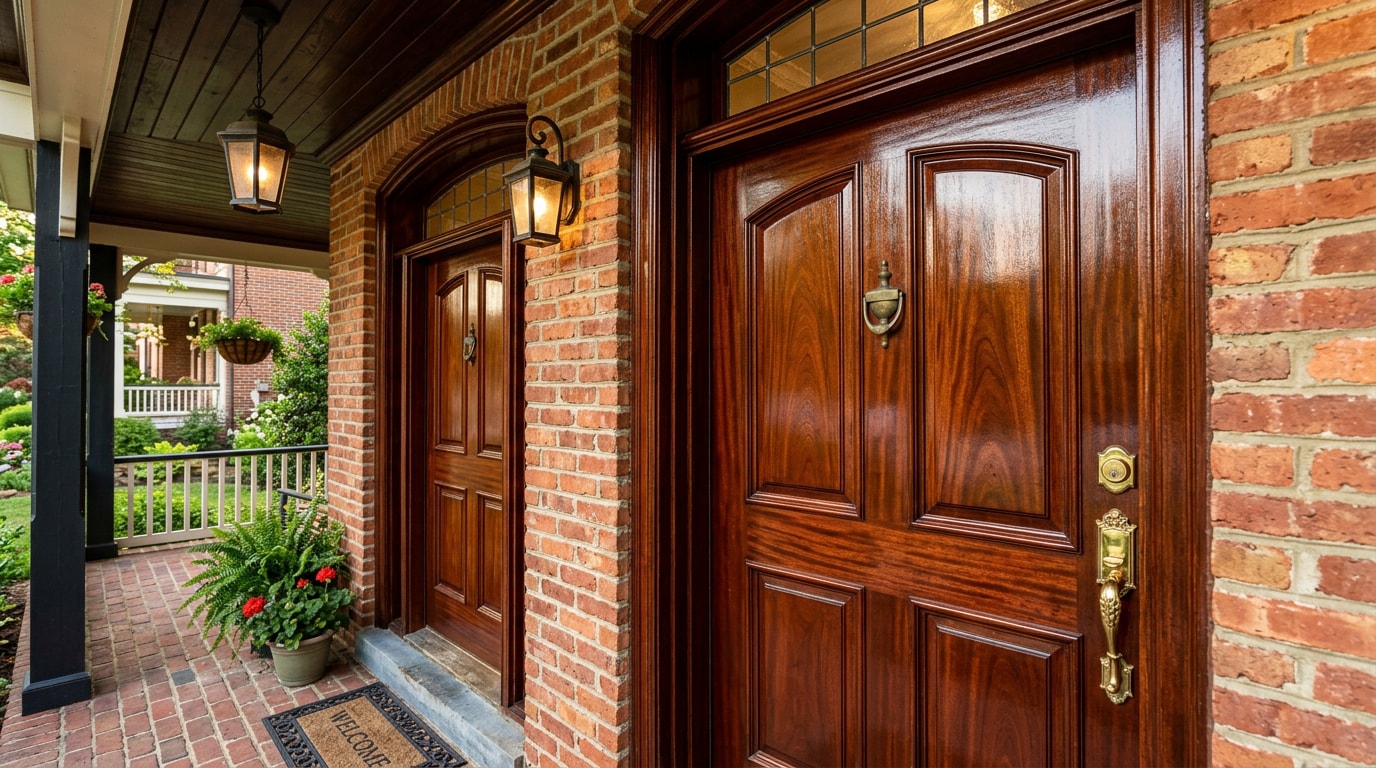
Wooden front doors in Jackson, GA have to survive something fiberglass and steel never deal with the same way: a Piedmont climate that swings from sticky 95°F summers to damp, near-freezing winters, sometimes in the same week. That swing is exactly why so many local homeowners ask whether solid wood is worth the extra cost and upkeep compared to a synthetic alternative. This guide breaks down the species that hold up best here, what you'll actually pay installed in 2026, and the maintenance routine that keeps a wood door looking right for decades.
Types of Wood for Entry Doors
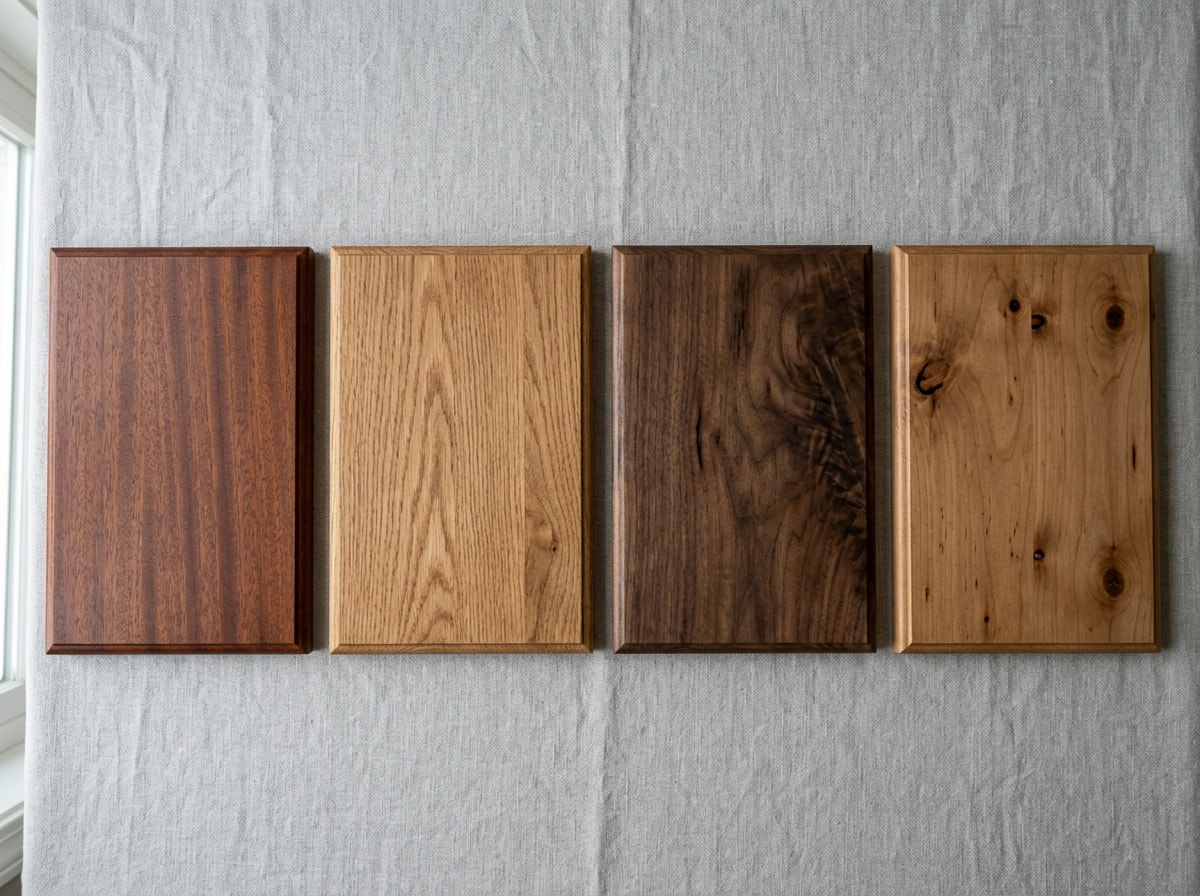
The species you choose drives density, grain pattern, and how well the door handles Georgia's humidity swings.
- Mahogany — dense, naturally rot-resistant, and takes stain beautifully. One of the more reliable choices for humid Southern entries.
- Oak — bold, visible grain and serious strength, but its porous structure needs diligent sealing against moisture.
- Walnut — rich, dark tone and tight grain prized for custom builds. Runs pricier and prefers a covered entry.
- Knotty alder — rustic, textured look at a friendlier price point, though it's softer and dents more easily than mahogany or oak.
- Fir — budget-conscious and stains well, but leans hard on a quality finish since it's less naturally weather-resistant.
- Cherry — fine, even grain, generally better suited to covered entries than full sun exposure.
You can browse completed entryway and outdoor living projects on our projects page to see how different species and finishes actually look once installed.
Wood Entry Doors vs. the Alternatives
The real decision most buyers are making isn't between wood species — it's between materials. Wood wins on aesthetics and customization; fiberglass and steel win on low maintenance and, in steel's case, security and price.
Fiberglass mimics wood grain convincingly and resists humidity without warping, which makes it a popular middle-ground choice. Steel is the toughest and cheapest option but dents more easily and offers the least design flexibility.
One practical note for this region: pairing a dark steel or aluminum storm door with a wood front door can trap heat against the wood on a west-facing entry, accelerating finish breakdown during Georgia's summer sun. If you're weighing a storm door for extra protection, our guide to custom storm doors for East Metro Atlanta homes covers combinations that won't fight your wood door's finish.
Exterior Door Costs
Wood typically costs more than fiberglass or steel because of material sourcing, craftsmanship, and the labor involved in fitting a solid door properly. Here's a general sense of 2026 pricing, though actual numbers vary by species, installer, and local market conditions.
| Material | Material Cost | Installed Cost |
|---|---|---|
| Wood | $1,000 – $4,000+ | $2,000 – $7,500+ |
| Fiberglass | $500 – $2,500 | $1,200 – $4,500 |
| Steel | $300 – $1,500 | $900 – $3,500 |
Custom sizing, glass inserts, or specialty hardware can push wood door projects toward the higher end in the Jackson, GA area, so treat these as planning ranges rather than quotes.
Worth knowing before you buy on resale value alone: in the most recent national Cost vs. Value data, a steel entry door replacement recouped about 216% of its job cost at resale , which is the best-performing door category tracked in that report. Wood doors aren't tracked the same way because pricing varies so widely by species and craftsmanship, so the honest case for wood is curb appeal and character rather than a guaranteed resale multiplier.
Choosing the Right Wood Entry Door for Your Home
Start with architecture. A craftsman bungalow calls for different proportions and panel styles than a modern farmhouse or a traditional colonial, and matching that style keeps the door from looking bolted on as an afterthought.
Beyond looks, check construction quality:
- Tight joinery with no visible gaps at the corners
- Consistent panel thickness across the slab
- An evenly applied finish, not just sprayed on thin
- Hardware prep that matches your lockset and deadbolt exactly
Stain options range from natural wood tones that show off grain to painted finishes that hide less-expensive substrates. Both are valid depending on whether you want the wood itself to be the focal point.
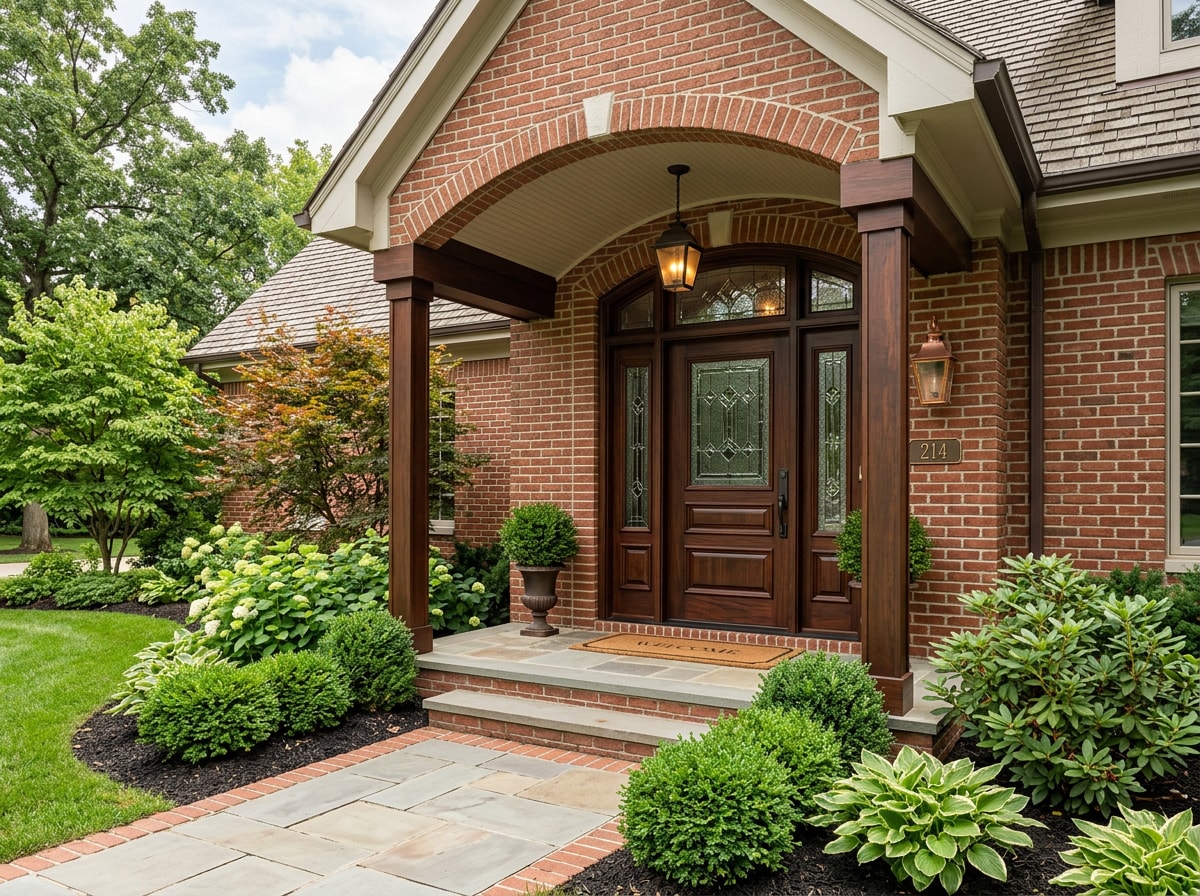
If your entry gets full afternoon sun, pairing the door with a covered porch, portico, or patio cover cuts UV and rain exposure dramatically and stretches the time between refinishing jobs. Our custom outdoor living design team works with homeowners across the Jackson, GA area on exactly this kind of entry planning, and a quick outdoor structure consultation before you order a door can save a finish redo down the line.
Solid vs. Engineered Wood
A solid wood door is milled from a single species throughout, giving it an authentic feel and the option to be refinished many times over its life. An engineered wood door uses a core of stabilized wood or composite material wrapped in a wood veneer, which resists warping and cracking better than solid wood but offers fewer refinishing cycles before the veneer wears thin.
Solid wood costs more and is more sensitive to humidity swings. An engineered or veneer entry door trades a bit of authenticity for dimensional stability, which is often the smarter call in a climate with big seasonal shifts like ours.
Wood Door Maintenance and Longevity
A wood front door's biggest threats aren't impact or age. They're moisture, direct UV exposure, and repeated temperature swings that cause the wood to expand and contract.
That movement is a documented property of wood itself, not a manufacturing flaw. Research from the USDA Forest Service's Forest Products Laboratory explains that wood is dimensionally stable when the moisture content is greater than the fiber saturation point, but it changes dimension as it gains or loses moisture below that point, shrinking as it loses moisture and swelling as it gains it, which can result in warping, checking, splitting, and loosening . That's the science behind why sealing and finish maintenance matter so much on an exterior door.
Watch for cracked caulking around the frame and finish that's gone dull or chalky. Both are early warning signs worth addressing before moisture gets underneath the surface.
How to Clean a Wood Front Door
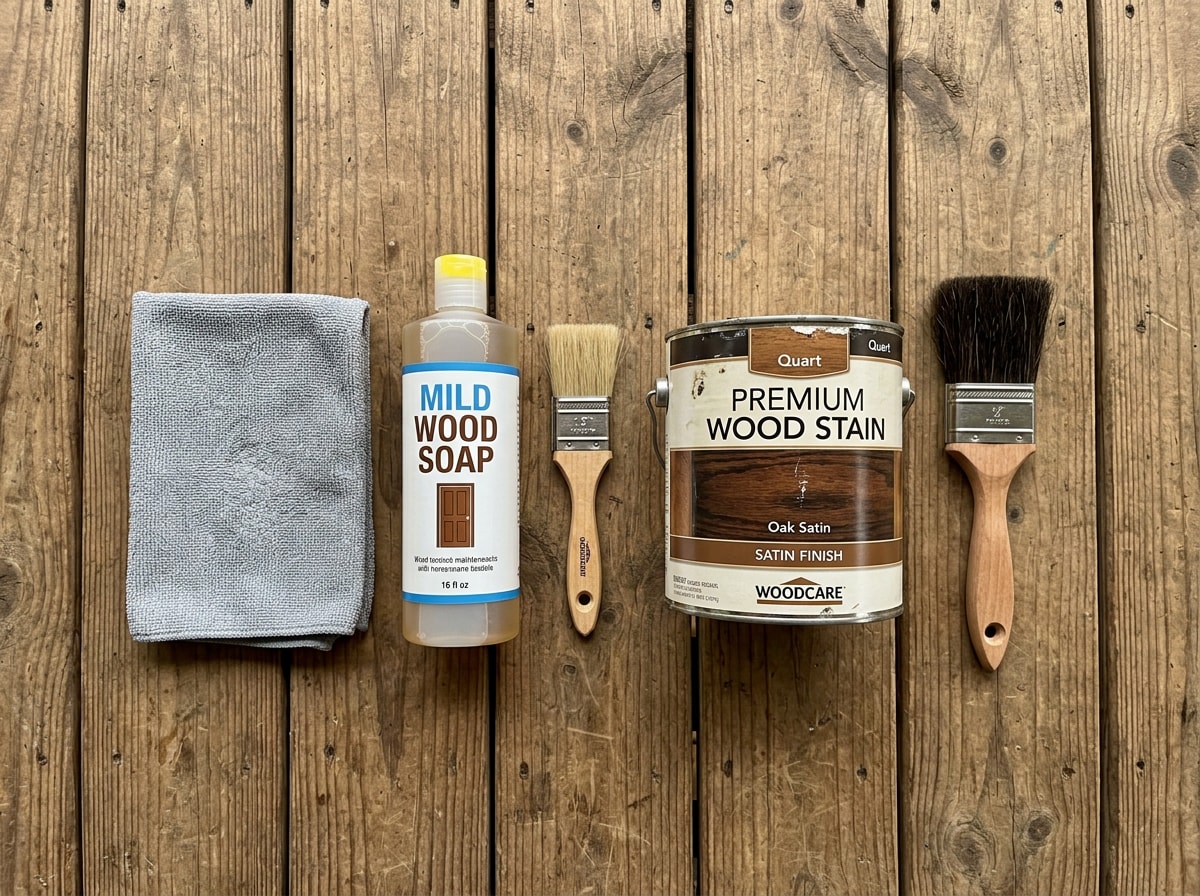
Clean a wood front door with mild soap, warm water, and a soft cloth. Avoid ammonia-based or abrasive cleaners, which strip finish and leave the wood exposed to Georgia's sun and humidity. Wipe it down every few weeks and dry it fully afterward.
For entries that get heavy afternoon sun, plan on refinishing every two to four years rather than waiting for visible damage. Keeping weatherstripping in good shape also helps regulate the temperature swings that stress both the door and your home's energy efficiency. The U.S. Department of Energy notes that weather-stripping should be installed on the door jamb so the material creates a seal with the exterior face of the door on the top and both sides, and door sweeps, thresholds, and door shoes are good ways to seal gaps under exterior doors .
Planning a new wood front door alongside a covered porch, pergola, or patio cover that shields it from sun and rain? Get a free estimate from our team and we'll walk through options that protect your investment from day one.
FAQ
How much does a wood front door cost to install?
Expect a wood front door installation cost between roughly $2,000 and $7,500, depending on species, size, hardware, and glass inserts. Custom or oversized doors run toward the higher end, while standard-sized, simpler designs stay closer to the lower range. Always get a local quote, since labor rates vary.
How long do wood front doors last?
A well-built, properly maintained wood door can last 20 to 30 years or longer. The biggest factors in wood door lifespan are how much overhang protects it from direct sun and rain, how humid the climate is, and how consistently it's cleaned and refinished.
Are wood entry doors a good choice for front doors?
It depends on your priorities. Wood doors offer unmatched character, customization, and curb appeal, making them a great choice if you value design over low upkeep. If minimal maintenance matters more, fiberglass or steel may suit your household better.
Do wood entry doors require more maintenance than other materials?
Yes. Wood door maintenance generally demands more attention than fiberglass or steel, including periodic refinishing, sealing, and moisture checks. Fiberglass and steel resist humidity and UV damage with far less routine care, which is the main trade-off for wood's authentic look.
What's the best wood for a front door in Georgia's humidity?
Mahogany is generally the top pick for Jackson's climate because it's dense, naturally rot-resistant, and takes stain evenly. Oak is a strong second choice if it's sealed diligently, since its porous grain is more prone to moisture absorption than mahogany.
How do I keep a wood front door from warping in summer heat?
Keep the finish intact, check weatherstripping each spring, and avoid pairing a dark storm door with a wood door on a sun-facing entry, since trapped heat accelerates finish breakdown. A covered porch or overhang that blocks direct afternoon sun is the single biggest thing you can do to slow warping and fading.
Georgia ScreenRooms has been building outdoor living spaces across east metro Atlanta since 2001 , and that same crew helps Jackson-area homeowners plan entries, covered porches, and patio structures that protect wood doors from the elements rather than work against them. Visit our homepage to see the full range of services, or contact us for a free, no-obligation estimate.