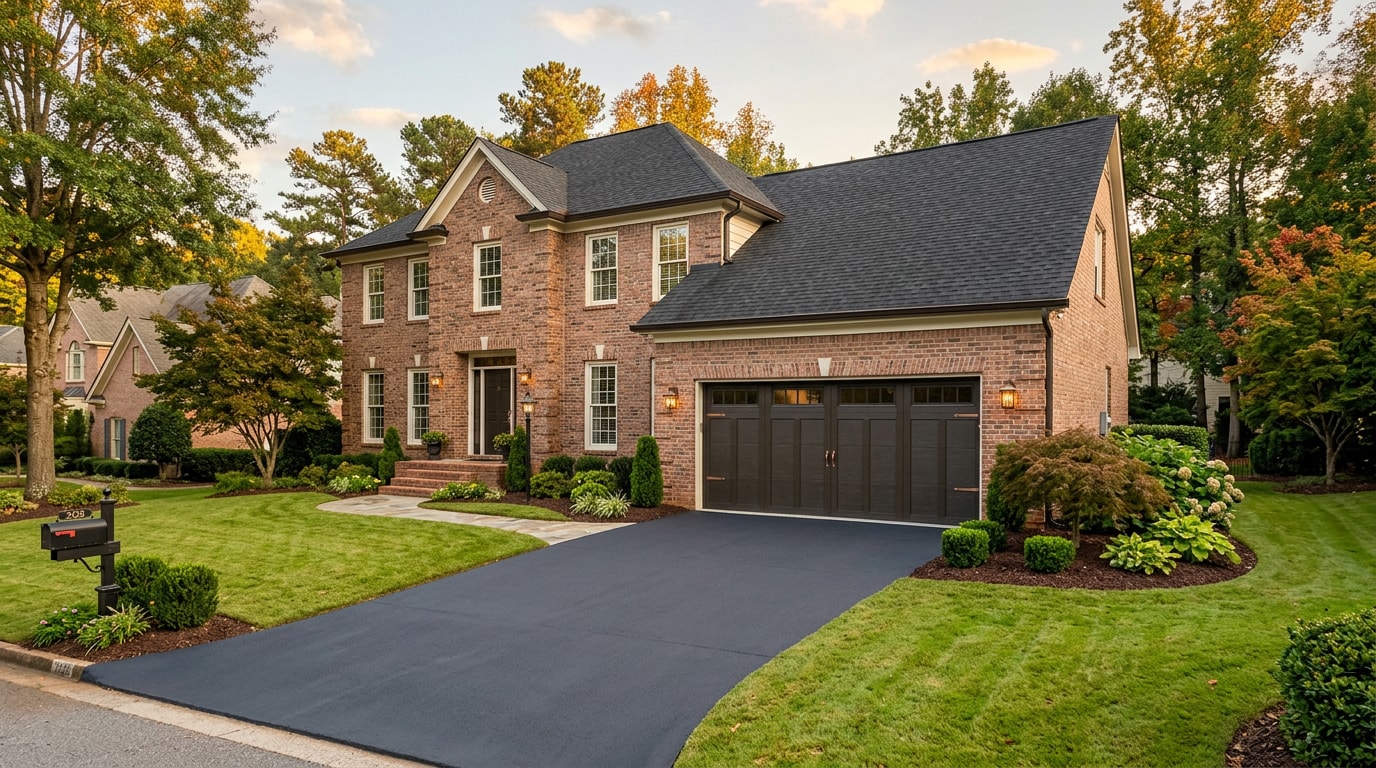
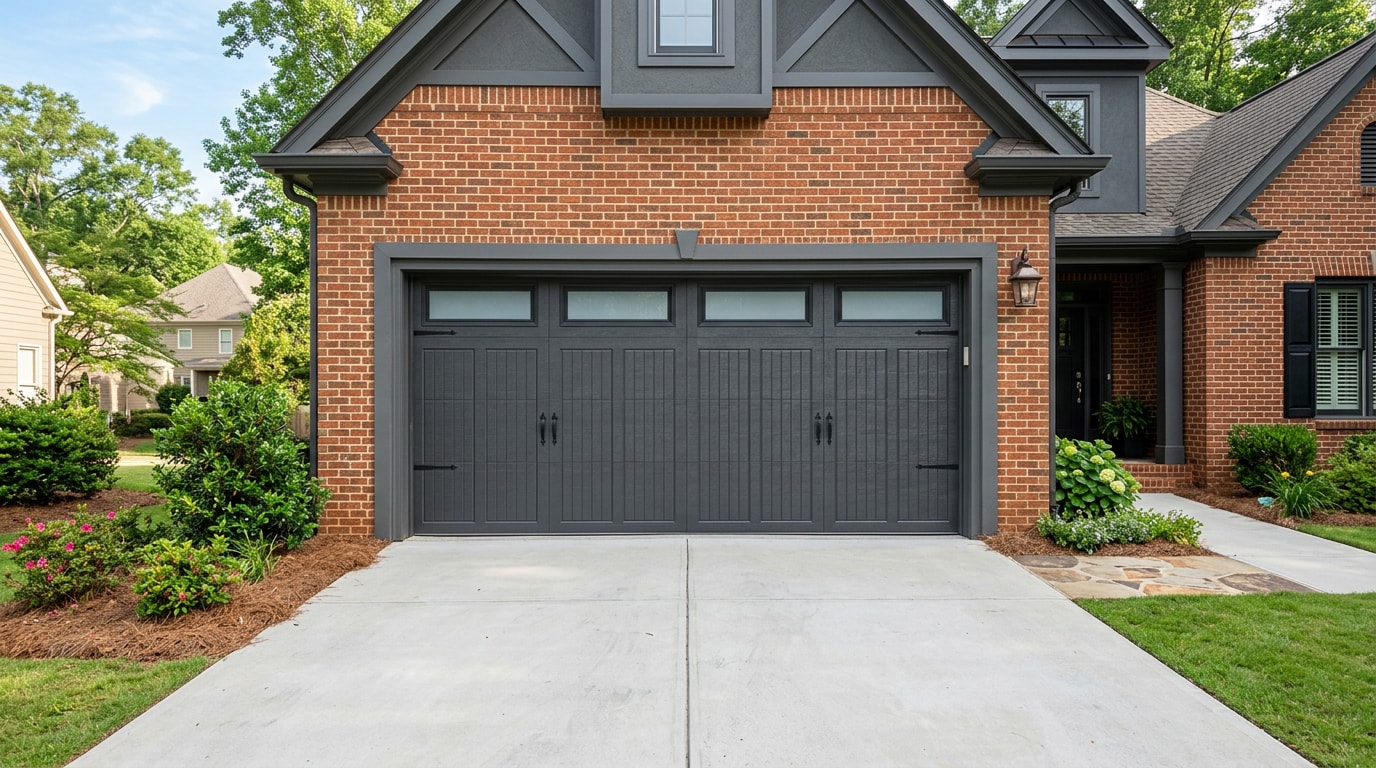
Modern insulated garage doors in Conyers, Monroe, Dacula, Grayson, Stockbridge & surrounding areas now carry higher R-values, quieter hardware, and panel styles built for contemporary home exteriors, not just the carriage-house look most people still picture. Georgia's humid summers and short, sharp winter cold snaps put real stress on a thin, uninsulated door. This guide breaks down the styles, R-values, costs, and 2026 code details worth knowing before you call an installer.
Why Insulation Matters for This Climate
Homeowners across this region deal with hot, humid summers and mild but variable winters, so doors need to resist temperature swings and moisture without warping or stalling on the track. Insulated, weather-sealed construction performs best here, though the details shift slightly by location.
Conyers and Stockbridge sit closer to metro Atlanta's humidity belt. Monroe, Dacula, and Grayson run a bit more inland, with wider day-to-night swings in winter. The practical takeaway: homeowners in every one of these cities benefit from the same core upgrade, insulated panel construction, just tuned slightly for sun exposure and orientation.
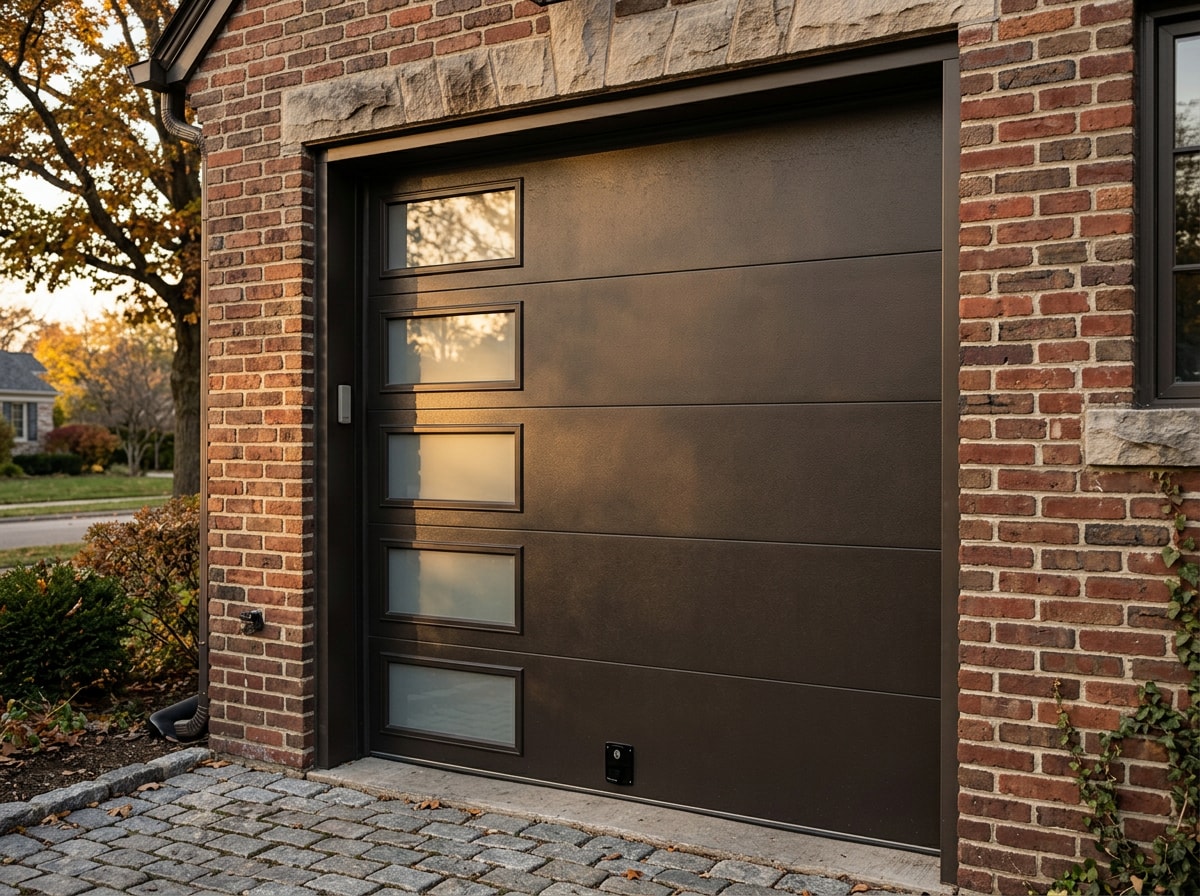
Types of Modern Insulated Garage Doors
Sectional garage doors dominate the modern market, but steel, carriage-style, and glass-panel options all come in insulated builds now. Here's what separates them.
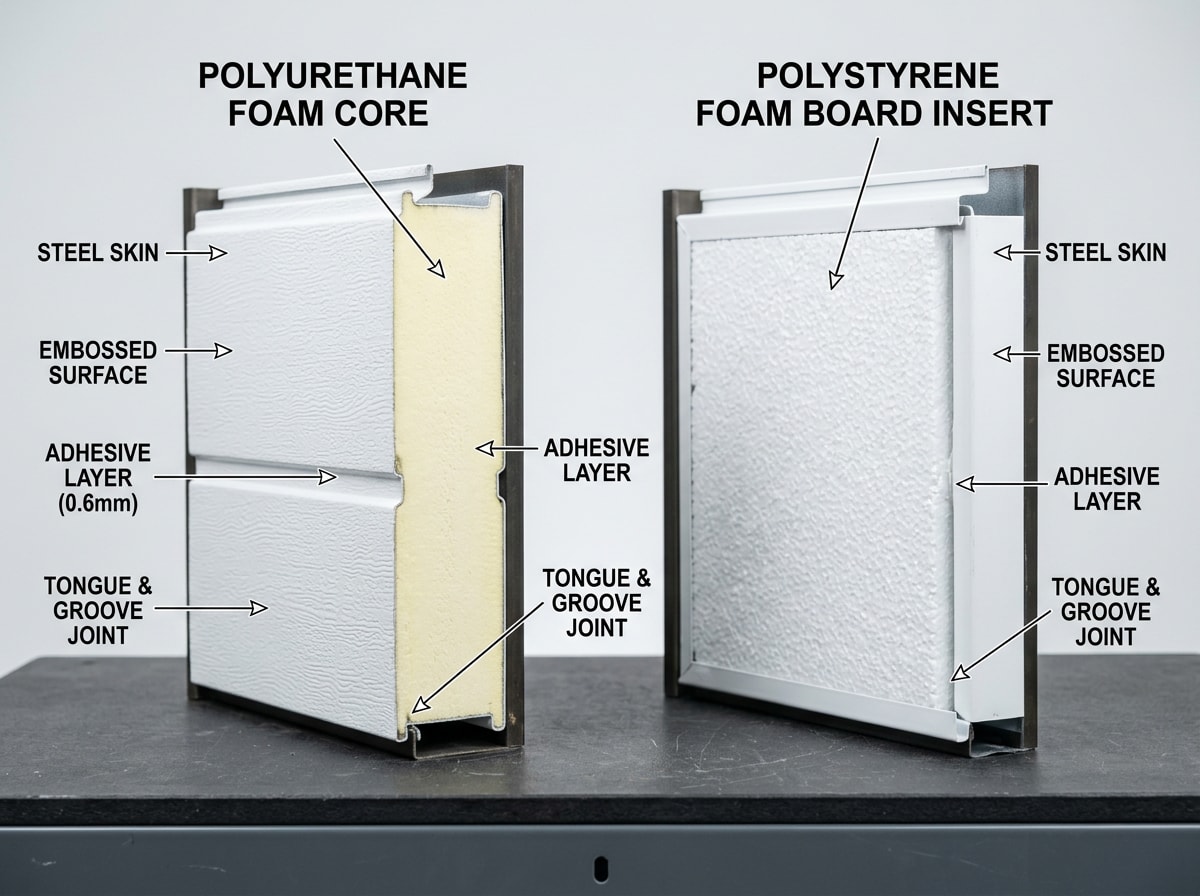
Insulated Core Material: Polyurethane vs. Polystyrene
The real performance difference is in the core, not the surface finish.
- Polyurethane foam is injected as a liquid that expands and bonds directly to both steel skins, filling the entire cavity. It typically delivers R-values from roughly 12 to 20-plus and adds rigidity and sound dampening.
- Polystyrene panels are rigid foam boards that slide into the sections. They land lower, generally R-6 to R-10, and cost less upfront while still cutting noise and drafts compared to a bare steel door.
The best R-value for a garage door depends on your local climate and how you use your garage. For attached garages or those in cold climates, an R-value between 10 and 13 is best. Homes in more extreme climates should aim for an R-value of 15 or higher. If your garage is detached or you live in a more temperate zone, a moderate R-value between 6 and 10 may suffice. That means an attached garage with a bonus room above it in Monroe or Grayson is a polyurethane candidate, while a detached garage in Dacula used only for parking can usually get by on polystyrene.
R-Value vs. U-Factor: The Detail Most Buyers Never Hear
Most garage door shopping guides stop at R-value. That number is less reliable than it sounds. In the past, the garage door industry used calculated R-value as the default thermal rating, but R-value is of limited usefulness since it's a calculation through the center of a door section, not a measurement of the thermal properties of a complete installed door. A tested U-factor, which accounts for the whole assembly including seals and hardware, is the more accurate number to compare between brands. Ask your installer for the U-factor label, not just the marketing R-value on the box.
What It Actually Costs
Price depends on door type, insulation tier, size, and whether an opener is bundled in. Here's a realistic range for this market:
| Door Type | Insulation | Typical Installed Cost (Single/Double) | Best For |
|---|---|---|---|
| Non-insulated steel | None | $600 – $1,200 / $1,000 – $1,800 | Detached, unheated garages |
| Polystyrene-insulated steel | R-6 to R-10 | $900 – $1,800 / $1,500 – $2,800 | Detached garages, moderate budgets |
| Polyurethane-insulated steel | R-12 to R-20+ | $1,400 – $3,000 / $2,200 – $4,500 | Attached garages, workshops, bonus rooms above |
| Carriage-style, insulated | R-12 to R-18 | $2,500 – $5,500+ | Curb-appeal-focused upgrades |
Windows, custom hardware, and a matching opener upgrade (heavier insulated doors often need a stronger motor) all add to the total. Exact pricing varies by opening size and installer, so a free estimate is the only way to get a real number for your home.
The Benefits Beyond Curb Appeal
Energy and Comfort
An insulated door helps keep interior temperatures steadier, which matters most when the garage shares a wall with living space. Less heat and cold transfer through the garage means less load on the HVAC system next door. The U.S. Department of Energy's own home energy assessment guidance points to under-insulated areas and air leaks, not just attic and wall cavities, as common places a home loses conditioned air, and a garage door is one of the largest moving openings in the building envelope.
Noise and Durability
Insulated panels are stiffer and dampen vibration, so the door is noticeably quieter closing and opening. That stiffness also means less flex in wind and fewer dents from everyday bumps, which matters on a door that's opened and closed multiple times a day.
Georgia Code Requirements You Can't Skip
Insulation upgrades don't exempt a door from code. As of January 1, 2025, the current state minimum standard codes include the 2024 International Residential Code, with Georgia Amendments.
These new mandatory state codes, along with the corresponding Georgia Amendments, were adopted under the authority granted to the Board of Community Affairs, effective January 1, 2026. Every garage door installed in the area now needs to meet the current edition's wind pressure and anchorage requirements, confirmed by a design pressure (DP) rating on the door's label, not just a thicker-looking panel. Full details on the current mandatory and permissive codes are published by the Georgia Department of Community Affairs. For the R-value and U-factor testing methods manufacturers use to back their claims, DASMA's technical data sheets are the industry's public reference.
Serving Conyers, Monroe, Dacula, Grayson, Stockbridge & Surrounding Communities
We install and service modern insulated garage doors throughout Conyers, Monroe, and Grayson, plus Dacula homes in Gwinnett County and Stockbridge homes in Henry County. See our full coverage on the Conyers, Monroe, Dacula, Grayson & Stockbridge area page, or visit the homepage for everything else we handle on the exterior of a home.
If you're comparing door widths and openers before you buy, our 2026 buying guide to double garage doors in Conyers covers sizing and layout questions this post doesn't.
In our own installs across Rockdale and Walton counties, the comfort complaint we hear most often isn't actually about insulation, it's an undersized opener straining against a heavier insulated door. Budget for that opener check before you fall in love with a high-R-value panel.
FAQ
Is it worth choosing an insulated door for an un-insulated garage?
Yes. For large garage door openings, an insulated door is still worth it even if the surrounding garage walls aren't insulated, since the door is the largest single opening in the structure and the biggest source of heat and cold transfer.
What is the best R-value for a garage door?
The best R-value for a garage door depends on your local climate and how you use your garage. For attached garages or those in cold climates, an R-value between 10 and 13 is best. Homes in more extreme climates should aim for an R-value of 15 or higher. If your garage is detached or you live in a more temperate zone, a moderate R-value between 6 and 10 may suffice.
How much does it cost to insulate a garage door in this area?
A basic polystyrene-insulated single door typically runs $900 to $1,800 installed. A polyurethane-insulated single door with a higher R-value runs $1,400 to $3,000. Double doors, custom sizes, and windows push costs higher. Request a free estimate for an exact number on your opening.
Do insulated garage doors reduce noise?
Yes. The foam core adds stiffness and mass, which dampens vibration and road noise, so the door closes and sits quieter than a single-layer steel panel.
Do you offer energy-efficient garage doors?
Yes. Our insulated door options help regulate indoor temperature year-round, reducing the load on your HVAC system in both attached and detached garages.
What materials are garage doors made of?
The most common materials are steel (durable, available painted, galvanized, or stamped), wood (classic look, higher maintenance), and glass (increasingly popular for modern curb appeal).
Steel vs. wood: which should I choose?
Steel doors are generally the lower-maintenance choice, typically finished with a pre-painted, baked-on coating that resists weathering better than bare wood over time. Wood offers a custom look but needs more regular upkeep in Georgia's humidity.
Does Georgia code require anything special for garage doors?
Yes. As of the current state minimum standard codes, garage doors must comply with the 2024 International Residential Code with Georgia Amendments, which sets wind pressure and anchorage requirements verified by a design pressure rating on the door's label.
Ready to compare real options for your home? Contact us for a free, no-pressure estimate on a modern insulated garage door built for Conyers, Monroe, Dacula, Grayson, Stockbridge, and the surrounding Georgia communities.