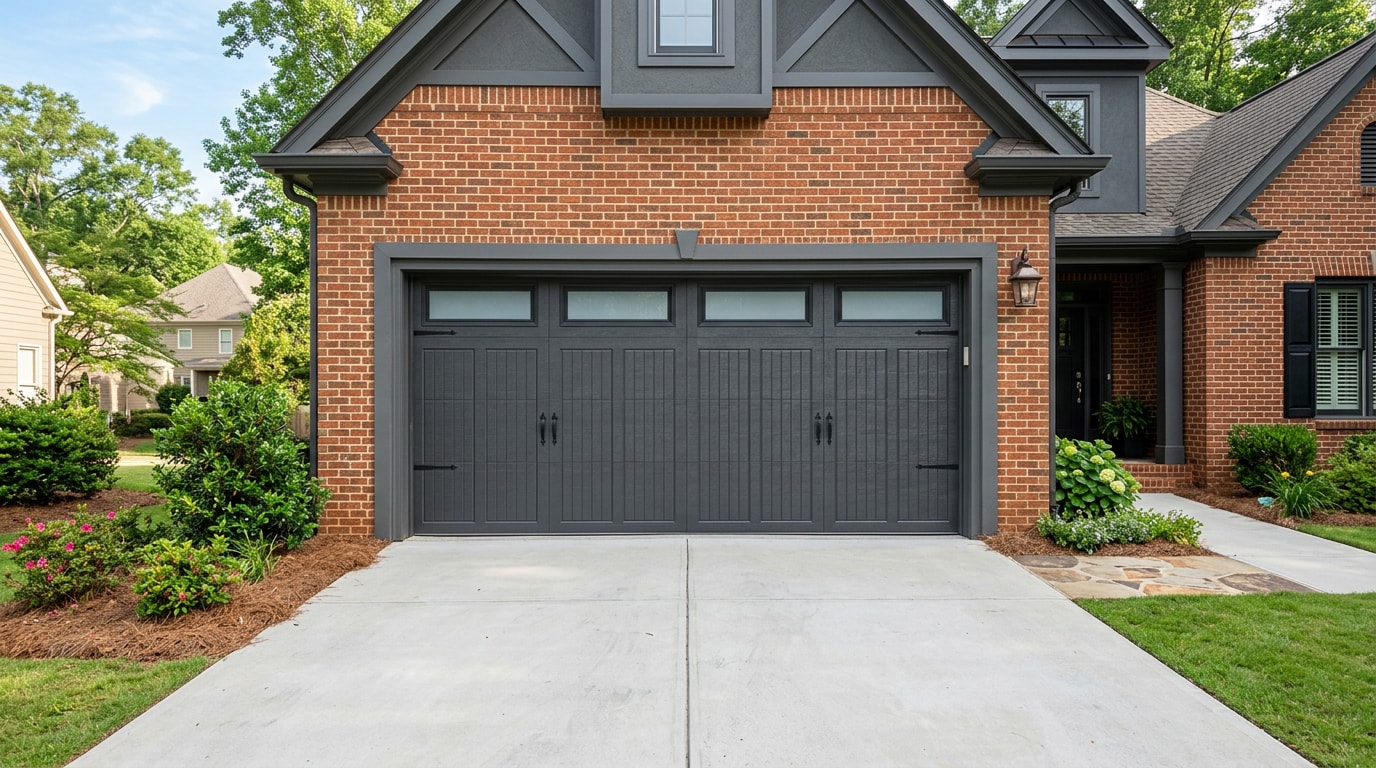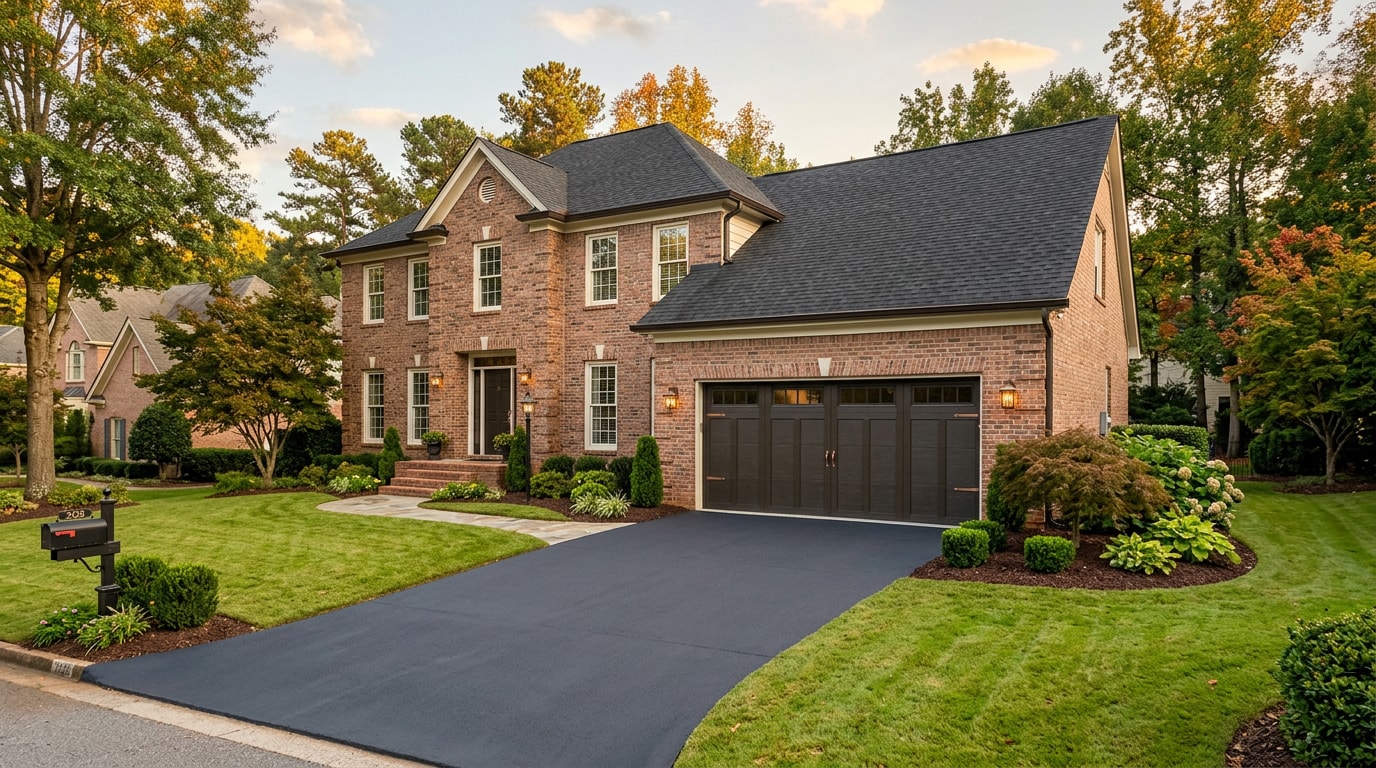
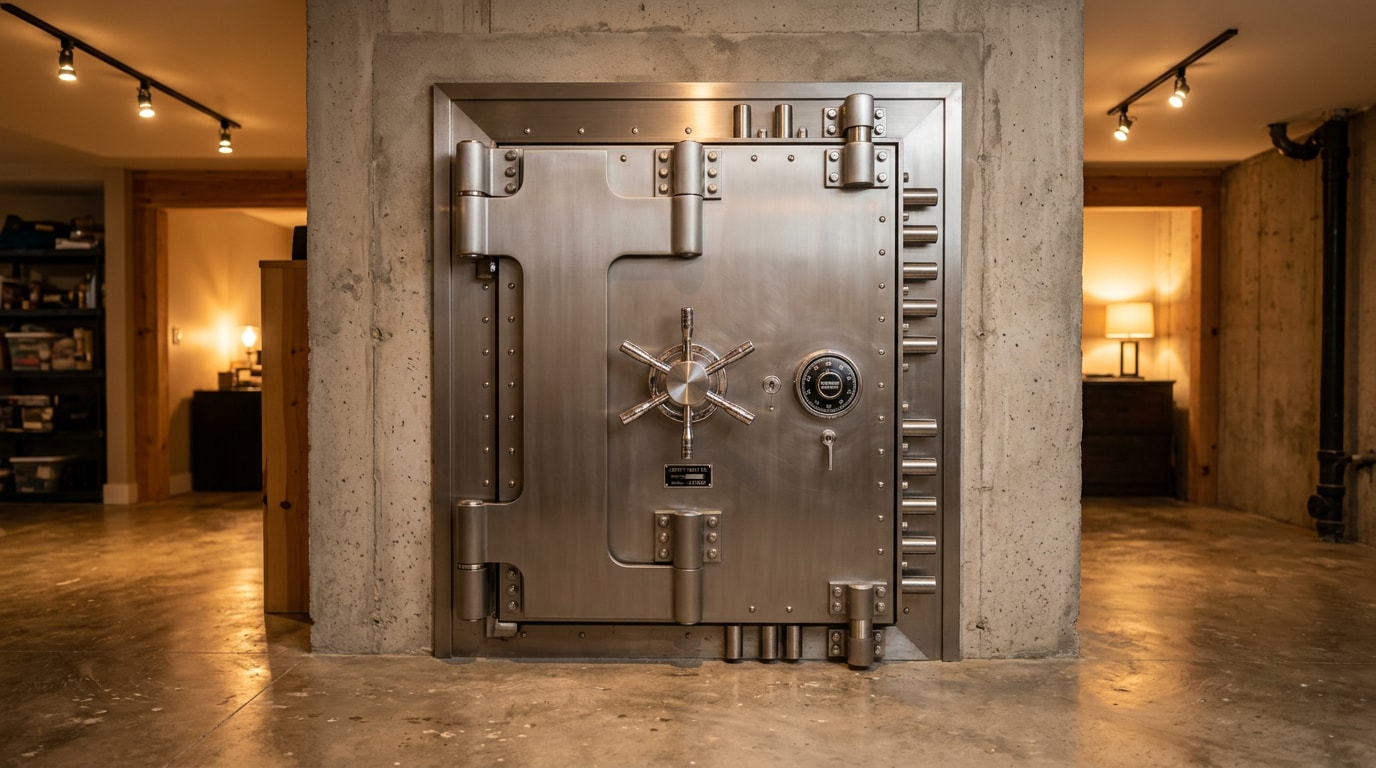
Vault doors in Newton County, GA are a construction decision, not a purchase you can make after the walls are already framed. Order the wrong swing, hand, or size and you're either reworking a finished opening or living with a door that doesn't fit the room's real purpose. This guide walks through the specs, costs, and planning order that actually matter so you can talk to an installer without getting talked past.
Quick Answer: What Vault Doors Cost in 2026
| Tier | Door-Only Price Range (2026) | What You Get |
|---|---|---|
| Entry-level | $4,000 – $6,500 | Mechanical lock, basic steel body, 60–90 minute fire rating |
| Mid-range | $6,500 – $10,000 | Electronic lock, heavier steel, 90–120 minute fire rating |
| Premium / near-commercial | $10,000 – $18,000+ | Maximum bolt coverage, reinforced plating, 120+ minute fire rating |
These figures cover the door itself. Surrounding wall construction, climate control, and any storm-shelter-grade reinforcement are separate line items your contractor should scope before you order anything.
Vault Room vs. Safe: Get This Distinction Right First
A safe is a self-contained, movable container that provides its own security on every side. A vault room is different — it's a built space where the walls, floor, and ceiling provide the security, and the vault door is simply the access point.
This distinction drives every decision after it. A heavy-duty door set into a standard 2x4 drywall wall gives you a false sense of security, because the wall becomes the weak point, not the door. Buyers who understand this upfront make smarter calls on wall construction and budget allocation before they ever look at a spec sheet.
A Vault Room Can Double as a Storm Shelter in Georgia
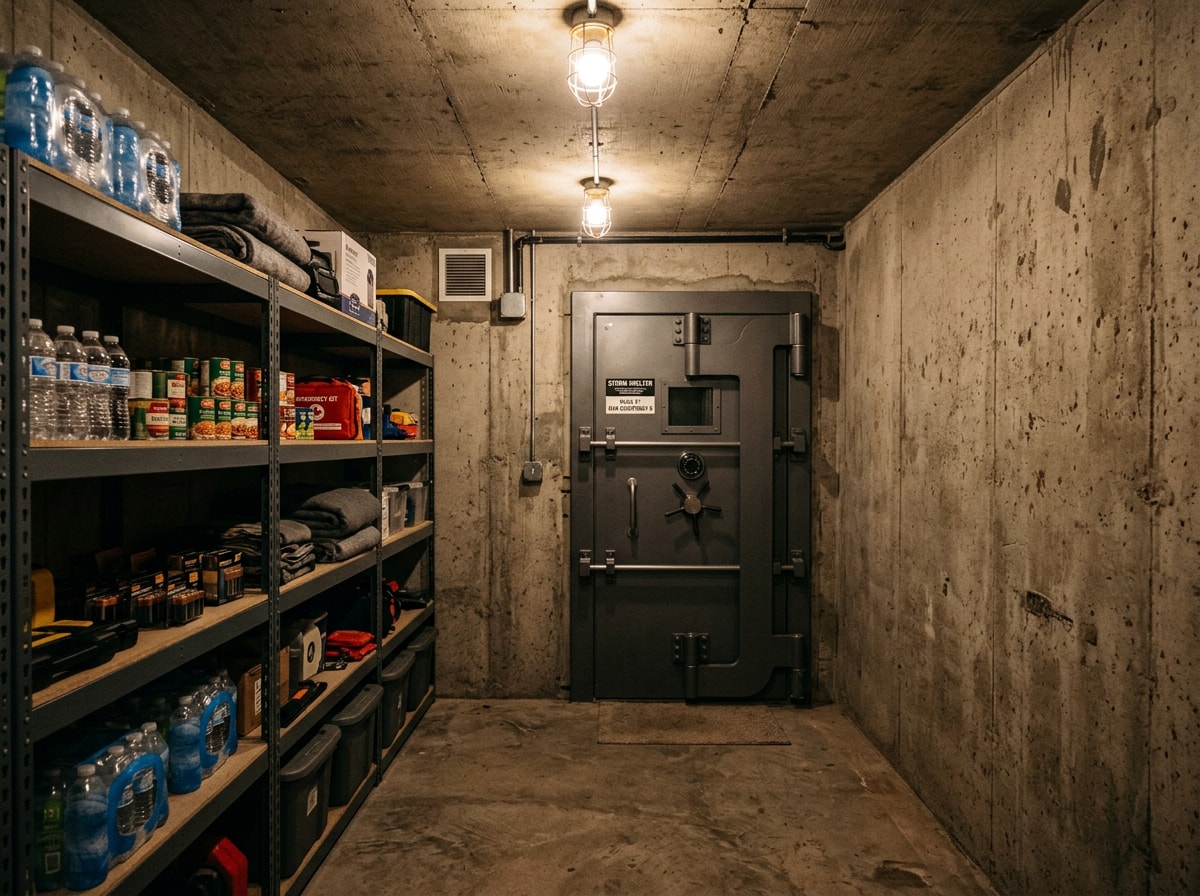
A properly built vault room with reinforced concrete or steel-reinforced walls and an inswing door can function as both secure storage and a storm shelter. That's a genuine regional advantage for Newton County homeowners, not a sales pitch.
A new climatological study showed that the area where the most tornadoes occur is shifting east from the traditional Tornado Alley in the Plains toward the Southeast , and that migration has moved the center of storm development roughly 500 miles closer to the Southeast . For homeowners already planning a vault room for firearms, documents, or valuables, adding the structural specs needed for storm protection is often a modest incremental cost compared to building two separate spaces. FEMA P-320, Taking Shelter from the Storm, provides guidance for residential safe rooms and construction drawings for site-built safe rooms and is worth reviewing before finalizing a design.
One detail most buyers never hear: only the door assembly itself is required to pass missile-impact testing under current storm shelter guidance, and a concrete shell paired with an untested steel door purchased off the shelf won't meet that standard. Confirm the specific door you're buying has been impact-tested before you assume it qualifies as shelter-grade.
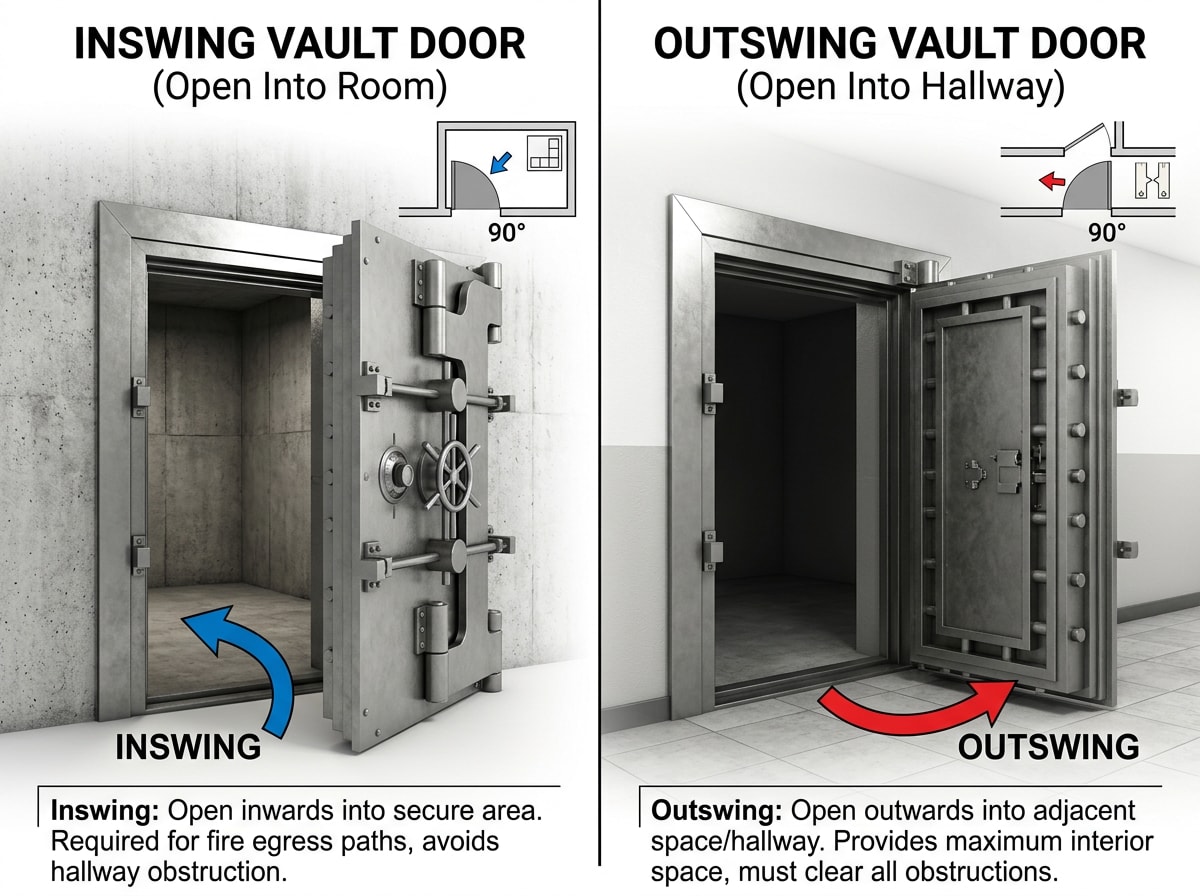
Swing Direction: Why It's a Life-Safety Decision, Not a Preference
Swing direction is arguably the single most consequential early decision in a vault door project. Get it wrong and you either lose usable floor space or create a hazard if someone is ever inside during an emergency.
- Out-swing rotates away from the protected space, freeing up interior floor area but requiring clear corridor depth in front of the opening.
- In-swing rotates into the protected space, which works well when hallway or exterior clearance is tight, but it eats into the room's usable square footage.
| Factor | In-Swing | Out-Swing |
|---|---|---|
| Interior space used | Reduces usable floor space | Preserves interior space |
| Best for | Storm-shelter builds, tight exterior corridors | Pure collection/storage rooms with ample hallway clearance |
| Safety during emergency use | Generally preferred for shelter use | Requires a clear exterior path; can be blocked by debris |
| Typical incremental cost | Comparable, sometimes slightly higher for reinforced inward hardware | Comparable baseline cost |
For a Newton County build meant to double as a storm shelter, inward swing is usually the safer default. For a dedicated gun room or collectible storage space with no shelter function, out-swing is often the better use of square footage.
Hinge Hand Orientation
Hand orientation is determined by standing outside the vault, facing the door. Hinges on your left mean a left-hand door; hinges on your right mean a right-hand door. It's a small detail, but an easy one to get backward on paper.
Confirm hinge orientation against the finalized framing plan before ordering. A mismatched hand can mean reworking the rough opening after the door has already shipped.
Lock Type and Steel Construction
Once swing direction and hand orientation are settled, two more decisions shape the door itself: lock type and steel construction. One climate note first — Georgia's humidity makes dehumidification a near-requirement for a sealed vault room, especially one storing firearms or paper documents. Plan climate control alongside the door spec, not as an afterthought.
Lock type. Mechanical dial locks have fewer moving parts to fail and no batteries to replace, making them a dependable long-term choice. Electronic keypad locks offer faster access and programmable codes but introduce components that can be sensitive to humidity and temperature swings. Electronic lock buyers in Georgia should ask specifically about moisture resistance and battery backup.
Steel and frame. The frame matters as much as the door panel. Look for welded-steel frame construction with locking bolts that engage the frame at multiple points rather than relying on the panel alone. Steel gauge on both the door and frame should be evaluated together, since a thick door paired with a thin frame still leaves a weak point.
UL's burglary-resistant safe standard, UL 687, is now in its 15th edition and was reaffirmed in 2025 , and it's the independent benchmark most manufacturers reference on spec sheets. Ratings like TL, tool-resistant designed to resist hand and power tools, and TR, torch-resistant, are paired with time codes of 15, 30, or 60 minutes indicating how long the construction resists a sustained attack . When comparing two doors, match the TL/TR rating, not just the price.
Features Worth Paying For (and Ones That Aren't)
Not every line on a vault door spec sheet is worth paying extra for. Knowing the difference protects your budget.
Prioritize these:
- Thick anti-pry steel frame
- Concrete fire insulation poured into the door body
- American-made locking systems with a track record of reliability
- Heavy-duty bolt coverage across all sides of the door
- Reinforced center steel plating
- Multiple expanding fire gaskets that seal the opening under heat
Skip or deprioritize these:
- Decorative hardware finishes
- Oversized exterior handles
- Elaborate paint or trim packages
The first list affects how the door performs in a break-in attempt or a house fire, the two scenarios a vault door actually has to survive. The second list makes a door look impressive on a showroom floor without improving bolt strength, fire rating, or pry resistance. Prioritize structural and locking specs first, then decide whether cosmetic upgrades fit the remaining budget.
The Biggest Misconception About Vault Doors
Many homeowners assume a true vault room runs well over $100,000 to build. That's rarely accurate for a typical residential project. Pricing varies with door size, steel gauge, lock type, and wall construction, but most residential projects fall well short of that figure. The cost table at the top of this guide reflects realistic 2026 door-only pricing; room construction, climate control, and any shelter-grade reinforcement are additional and should be scoped with your contractor before you order.
Lead Time, Permits, and Planning the Opening
Vault doors typically need to be ordered eight to twelve weeks before the rough opening is framed, depending on the manufacturer and configuration. Ordering the door before finalizing the opening avoids the common and costly mistake of framing a space the door doesn't fit.
The International Code Council develops a family of coordinated building safety codes that help ensure the design and construction of safe, sustainable, and affordable structures , and local inspectors typically reference these provisions for load requirements when a heavy steel door is set into a framed or concrete wall. Check with the Newton County building department about permit requirements before construction starts; wall modifications for a vault room commonly fall under a standard residential permit.
Final price is a sum of stacked choices: door size, swing direction, lock type, steel gauge, bolt count, and fire rating all add up. Two doors that look similar in a catalog photo can differ by thousands of dollars once you account for these specs individually. Set a target security and fire-rating level first, then configure size, finish, and lock type within that framework.
Delivery and Installation
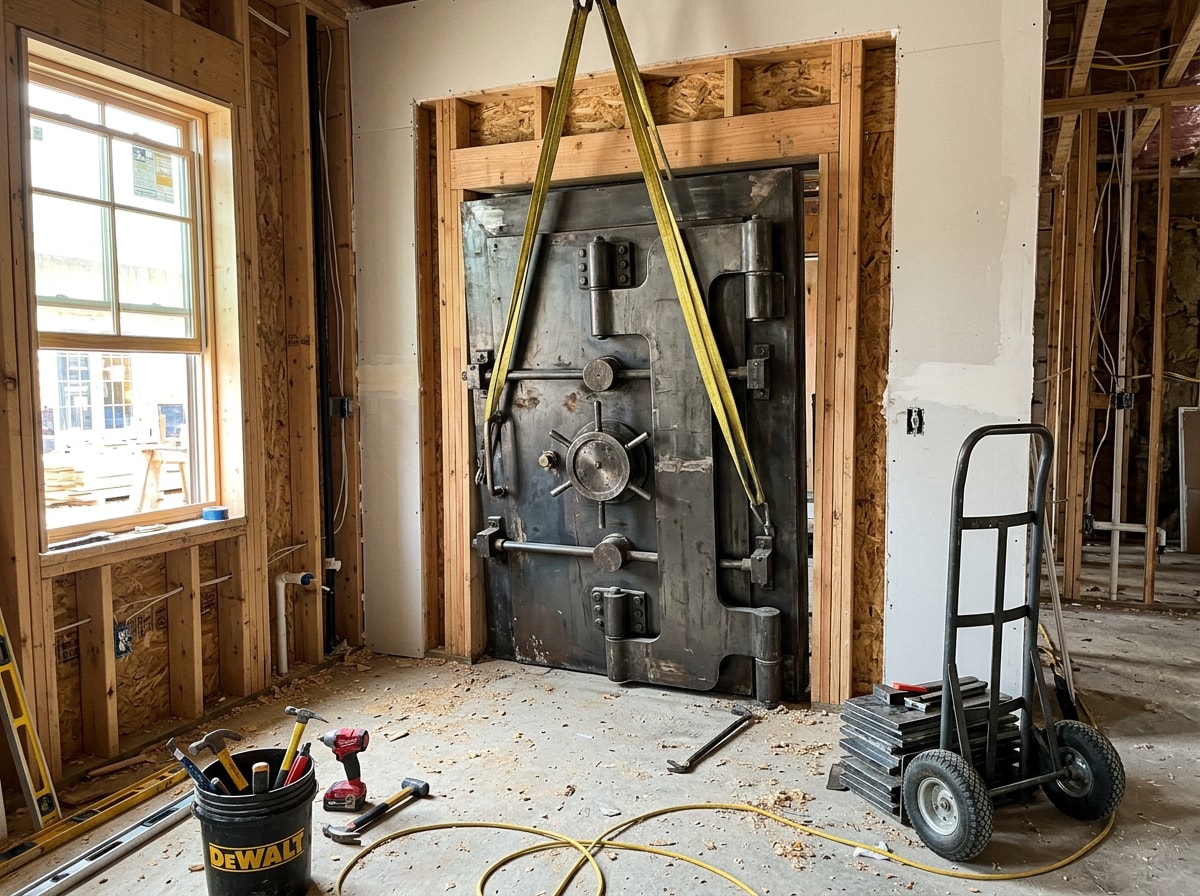
A vault door is heavy, often several hundred to over a thousand pounds, and it has to physically reach the finished opening before interior walls close it in. Plan delivery logistics before construction wraps up, not after.
Choose the vault door before finalizing the rough opening. Residential vault doors are not all built to the same dimensions, and this single decision, made in the wrong order, is one of the most common and expensive planning mistakes in a vault room project.
One of the earliest decisions is where to locate the vault room in the first place. Basements are popular in Newton County builds because existing foundation walls may already provide part of the concrete enclosure, reducing new construction costs.
Common Mistakes to Avoid
- Forgetting to plan the wall around the door. A half-inch steel door set into a standard 2x4 wood-framed wall creates an obvious weak point. Wall construction should match the door's security level, not fall short of it.
- Skipping humidity planning. Georgia's climate makes dehumidification a near-requirement for sealed vault rooms, particularly for firearms and paper documents. Skipping this step can lead to rust, warped shelving, or damaged inventory within a year or two.
- Ordering the door after the opening is framed. Confirm exact dimensions, swing direction, and hand orientation with the supplier before framing crews start work.
In our structural consultations across Newton County and the wider East Metro Atlanta area, our design team regularly sees homeowners discover mid-project that their wall framing can't actually support the door they already ordered. A short site visit before framing starts catches this every time. If you're scoping a secure room or any reinforced structure, our site assessment and outdoor structure consultation services exist for exactly this kind of planning gap.
Where Professional Design Help Fits In
Vault rooms are specialty structural builds, and the planning overlaps with the kind of custom construction work we do every day at Georgia Screen Rooms. Our custom outdoor living design service covers the same framing, load, and material questions that come up on a secure room build, whether it's attached to a patio structure or built into an existing basement. You can browse recent project examples or see how we serve homeowners throughout Newton County, GA.
If you're weighing other door upgrades for the same renovation, our interior French doors cost and buying guide for Conyers homeowners breaks down pricing factors that apply to high-end door projects generally.
Ready to scope your project? Get a free estimate and we'll walk through wall construction, framing timeline, and whether your planned opening fits the door you're considering.
FAQ
How much does a vault door cost?
Entry-level residential vault doors typically run $4,000–$6,500, mid-range doors with electronic locks and better fire ratings run $6,500–$10,000, and premium or near-commercial doors can reach $10,000–$18,000 or more. These figures cover the door only, not surrounding room construction.
What's the difference between a safe and a vault door?
A safe is a self-contained, movable container that provides its own security on all sides. A vault door is an access point installed into a built room, where the walls, floor, and ceiling, not the door alone, provide the surrounding security.
Can you build a vault room in an existing house?
Yes. Existing homes can be retrofitted with a vault room, though it requires evaluating current wall type, available structural support, and whether modular reinforced panels or full concrete construction fits the space. A contractor should assess the existing framing before any door is ordered.
How heavy is a vault door?
Vault door weight varies widely by tier, generally ranging from around 300 pounds for entry-level residential doors to well over 1,000 pounds for premium or near-commercial models. This weight is why delivery planning matters. Confirm access routes and equipment needs before the door ships.
Do you need a permit for a vault room in Newton County?
Usually, yes. Wall modifications, electrical work for climate control, and structural reinforcement typically fall under a standard residential permit. Check with the Newton County building department before framing starts, since permit requirements can vary by scope of work.
Can a vault door double as a tornado shelter door?
Only if the specific door assembly has passed missile-impact testing under current storm shelter standards. Not every steel vault door is rated for this; confirm testing documentation with the manufacturer before assuming a secure room doubles as a certified shelter.
About the Author
This guide was reviewed by the design consultation team at Georgia Screen Rooms, who evaluate structural framing, load-bearing walls, and custom reinforced builds for homeowners across Newton County and the East Metro Atlanta region. Questions about a specific project? Contact us directly.