Mobile home replacement windows in Barrow County, GA typically run $150 to $700 per window installed, and most homeowners start shopping after a cracked pane, a stuck sash, or a July electric bill that won't quit. This guide breaks down real pricing, the HUD code rules unique to manufactured homes, and the exact steps a DIYer or contractor follows to swap a unit without cracking the siding. Stick around for the sizing chart and a straight answer on whether to tackle this yourself or call a pro.
Mobile Home Replacement Window Costs in Barrow County, GA
Most mobile home replacement windows cost between $150 and $700 per window installed, depending on size, material, and whether you hire a pro or DIY the job. Custom sizing and professional installation push costs toward the higher end. Standard-size DIY projects land closer to the lower end.
Four factors drive most of the cost variation:
- Window size — larger living-room or picture windows cost more than a small bathroom or utility window.
- Material — vinyl is usually cheaper than aluminum with a thermal break.
- Standard vs. custom sizing — custom units cost more since they're often made to order.
- Local labor market — rates in Winder and the rest of Barrow County run close to the broader East Metro Atlanta average.
| Approach | Typical Cost Per Window | What's Included |
|---|---|---|
| DIY (materials only) | $100 – $250 | Window unit, butyl tape, caulk; your labor |
| Professional install | $250 – $700 | Materials, labor, warranty, code compliance |
A confident DIYer can often complete a straightforward swap for materials alone, plus a weekend of labor. Professional installation typically adds $75 to $200 per window in labor but also covers warranty protection and proper code compliance. For homeowners replacing several windows at once, that labor tradeoff is worth weighing against the time commitment.
Signs You Need Mobile Home Replacement Windows
A window needs replacing, not just repairing, when the glass is cracked or fogged, the frame has rotted, energy bills keep climbing, or the sash won't open or lock properly. These issues point to failed seals or structural damage that caulk and weatherstripping can't fix.
Energy Savings
Single-pane glass and worn seals let conditioned air escape, forcing your HVAC system to work overtime during Georgia's humid summers. Newer windows with insulated glass and tighter seals can noticeably cut cooling costs over a full season. Look for ENERGY STAR-certified units rated for your climate zone; manufacturers meeting these requirements are allowed to display the ENERGY STAR label on complying models .
Improved Comfort
Drafty windows make rooms uncomfortable year-round. You'll feel cold spots near the glass in winter and hear more outside noise than you should. Replacing old units with properly insulated frames improves comfort and quiets the home considerably.
Cracked or Broken Glass
Physical damage is the clearest signal it's time to replace rather than repair. Watch for this checklist:
- Cracked panes
- Fogging between double-pane glass (a sign the seal has failed)
- Sashes that stick or won't latch
- Steadily rising energy bills
- Visible rot or warping around the frame
During a recent site assessment for a screened-porch project near Winder, our team walked a single-wide built in the early 1990s that still had its original aluminum jalousie windows. Several panes were cracked, the cranks had seized, and condensation collected between the glass layers every morning. By the time the homeowner called around, three of the six windows needed full unit replacement, not just new weatherstripping, because the frames themselves had begun to pit and corrode.
Types & Sizes of Mobile Home Replacement Windows
Mobile home windows differ from stick-built house windows in two ways: the materials typically used and the standardized sizing manufacturers rely on.
Vinyl Windows
Vinyl is the most common choice for manufactured-home replacements because it's affordable, low-maintenance, and resistant to moisture damage. It won't corrode or rot, and modern vinyl frames hold up well against Georgia's humidity.
Aluminum Windows
Aluminum frames are lightweight and strong, and they resist corrosion reasonably well when properly coated. The trade-off is thermal performance: aluminum conducts heat and cold more readily than vinyl, so it can underperform on energy savings unless it includes a thermal break.
Mobile Home Window Sizes Chart
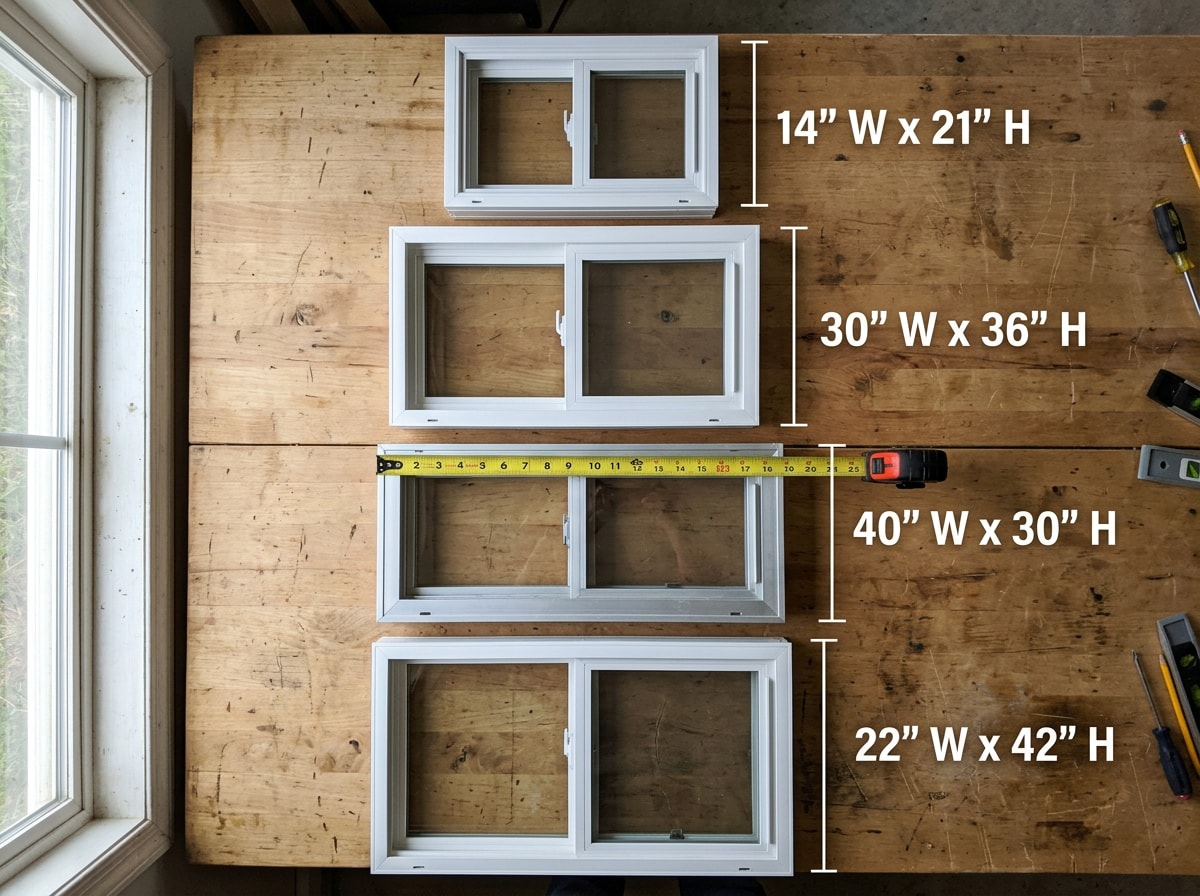
Standard mobile home window sizes include 14x27, 30x60, 36x54, and 36x60 inches, though exact dimensions vary by manufacturer and home age. What determines fit is the rough opening measurement, not the size of the old sash or glass panel you're removing.
| Common Size (inches) | Typical Use |
|---|---|
| 14x27 | Small bathroom or utility window |
| 30x60 | Standard bedroom window |
| 36x54 | Living room or kitchen window |
| 36x60 | Larger living area window |
Always measure the rough opening in the wall framing before ordering a replacement.
Tools & Materials Checklist
Before starting any DIY install, gather:
- Tape measure and level
- Screwdriver set
- Caulking gun
- Butyl or putty tape
- Shims
- Utility knife
- The replacement window unit itself
Having everything on hand before you remove the old window keeps the opening exposed to the weather for the shortest time possible. Skipping butyl tape or using the wrong caulk is one of the most common mistakes that leads to leaks months later.
Step-by-Step Installation Guide
This walkthrough is written for DIY-minded homeowners comfortable with basic tools. It covers measuring, removal, setting the new unit, and weatherproofing, plus a code note you shouldn't skip.
Measure Precisely and Order the Right Window
Measure the rough opening's width and height at three points each — top, middle, and bottom — and use the smallest measurement for your order. Check the diagonals to confirm the opening is square. An opening that's slightly out of square needs shimming during installation, not a differently sized window.
Remove the Old Window
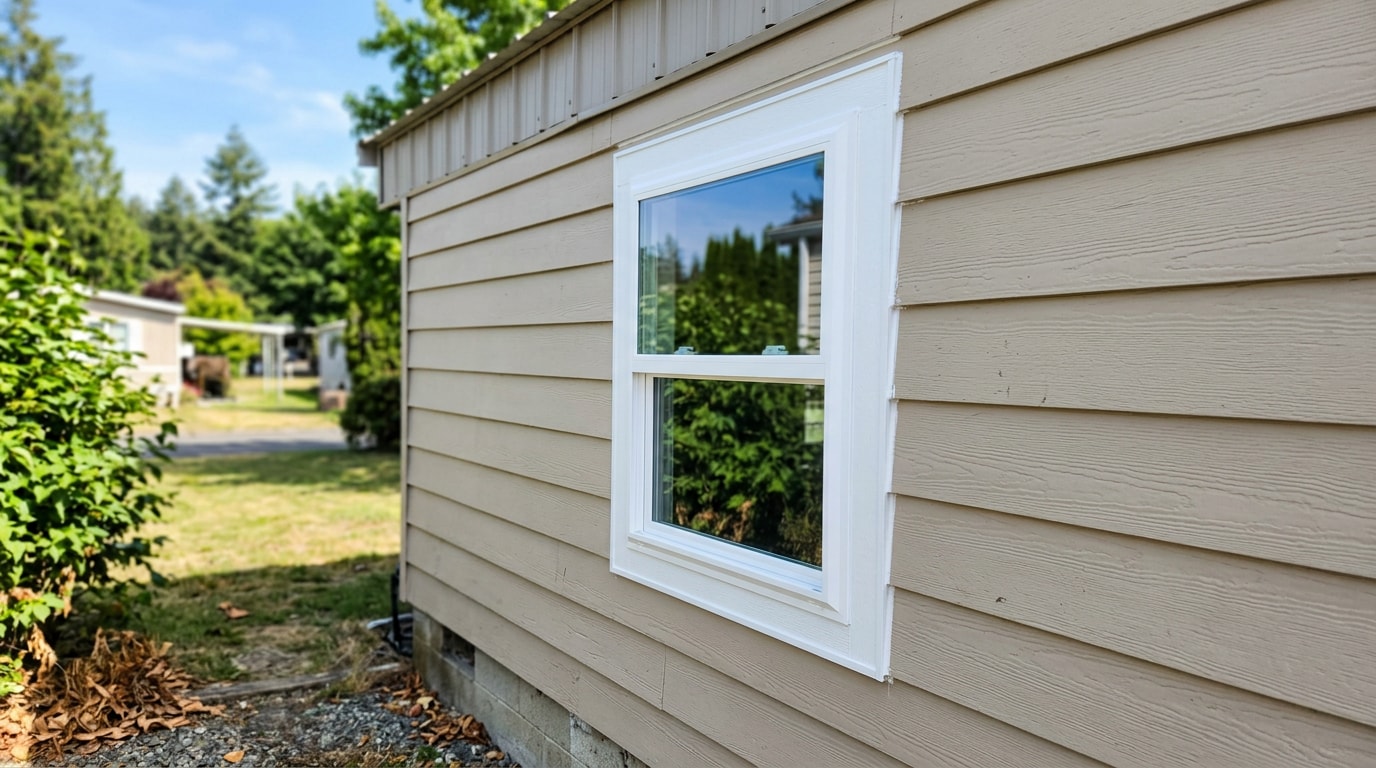
Locate and remove the screws holding the mounting flange to the wall framing, which may mean pulling back a section of lap siding first. Work a utility knife or flat bar around the perimeter to break the old sealant bond before lifting the unit free. Go slowly here; rushing this step is how siding gets cracked.
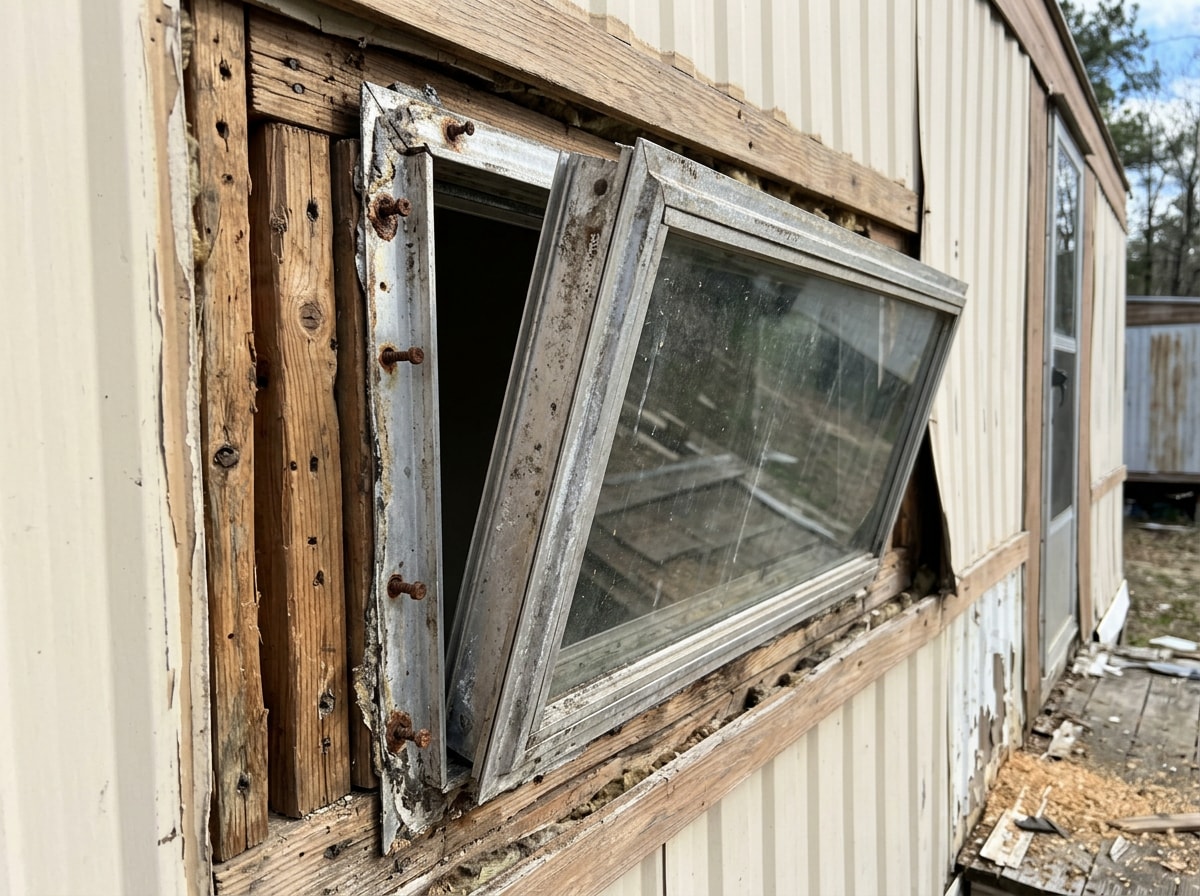
Apply Butyl Tape and Set the Window
Run a continuous bead of butyl or putty tape around the opening's perimeter before setting the new unit in place. Center the window, then use shims at the corners to level it precisely. Drive a few screws partway into the flange to hold it steady before fully fastening.
Weatherproof and Finish
Once the window is level and secured, reinstall the siding and trim you removed earlier. Test the sash to confirm it opens, closes, and locks smoothly. Finish with a bead of exterior-grade caulk along every seam to seal out moisture.
HUD Codes, Wind Zones & Egress Rules
In 1976, HUD established the Manufactured Home Construction and Safety Standards (MHCSS), commonly known as the HUD code , and it governs manufactured homes instead of standard local residential building codes. That changes what's required when you resize or replace a window opening.
Bedrooms have specific egress rules. These standards require that the window be at least 22 inches in the horizontal or vertical least dimension and at least five square feet in area, the bottom of the window opening shall be not more than 36 inches above the floor, and that locks and latches which need to be operated to permit exiting not be located more than 54 inches above the finished floor.
Homeowners resizing openings also need to respect wind-zone ratings for their region. Before altering any rough opening, review current requirements through HUD's manufactured housing homeowner resources or the full federal egress window standard. Getting this wrong can affect insurability or resale, so it pays to double-check rather than assume your home's original dimensions still meet current rules. For a deeper look at glazing and storm-window options that work with manufactured-home framing, see this storm windows guide for screen rooms, sunrooms, and under-deck spaces.
Upgrading Beyond the Window
New windows fix drafts and cracked glass, but they're not always the whole project. If you're already investing in your manufactured home's exterior, it's worth asking whether a screened porch, patio cover, or under-deck living space would get more day-to-day use out of the house. We see this often in Barrow County: a window replacement turns into a conversation about enclosing a side porch or adding shade over a deck once the homeowner realizes how much more comfortable the space could be.
If that sounds like your project, start with a site assessment or an outdoor structure consultation to see what fits your lot and home. For manufactured homes specifically, a screen enclosure or under-deck enclosure can extend usable living space without the complexity of a full addition.
Hiring a Contractor vs. Doing It Yourself
Not every window installer has real experience with manufactured-home flange mounting, which is a meaningfully different process from retrofitting a stick-built house. Start by gathering three to five quotes so you can compare pricing and scope side by side. Ask each contractor directly about their manufactured-home experience, check references from recent jobs, and confirm they're properly licensed and insured. Get the scope of work, materials, and timeline in writing before anyone starts.
If your project is really about adding usable outdoor space rather than a straight window swap, Georgia ScreenRooms has worked throughout Barrow County and the surrounding counties since 2001. Get a free estimate and we'll walk the property, measure openings, and tell you honestly whether a window swap, a screen enclosure, or both make sense for your budget.
FAQ
How much do mobile home replacement windows cost?
Most mobile home replacement windows cost between $150 and $700 per window installed, depending on size, material, and whether you hire a pro or DIY. See the Costs section above for a full breakdown.
What size is a standard mobile home window?
Common standard sizes include 30x60, 36x54, and 36x60 inches, though exact dimensions vary by manufacturer and home age. Always measure your actual rough opening before ordering, since "standard" sizing isn't universal across brands.
Can you install regular house windows in a mobile home?
Generally yes, but only if the size and frame depth match your home's rough opening and framing. Standard house windows often aren't designed for manufactured-home flange mounting, so compatibility needs checking before purchase.
How long does it take to replace a mobile home window?
An experienced DIYer typically needs one to two hours per window, while a professional crew often finishes a single window in under an hour. Whole-home replacement projects take longer depending on window count.
Do you need a permit to replace mobile home windows in Barrow County?
A straight like-for-like swap in the same rough opening usually doesn't trigger a permit, but resizing an opening or changing an egress window can. Check with the Barrow County building department before you order custom sizes.
What's the difference between a flange and a flush-fin mobile home window?
A flange window has a mounting lip that screws directly to the wall framing, which is standard on most manufactured homes. A flush-fin or pocket window slides into an existing, square jamb without disturbing the siding, making it a faster retrofit when the old frame is still sound.